 English


How to Compare Cobb Elevators Before Requesting a Quotation
Learn how to compare Cobb elevators by catalogue reference, length, working-end design, form and handle style, then turn those details into a clear RFQ and receiving checklist.
Reviewed against DIN sterilization basket standards, itemized surgical set BOMs, and operating theatre turnaround protocols.
On this page (12)
- Why the Cobb Name Is Not a Complete Product Specification
- Catalogue Variables to Compare Like for Like
- Cobb Elevator Catalogue Comparison
- How to Record Length, Working End, Form and Handle
- Building a Precise Cobb Elevator RFQ
- Receiving-Inspection Checklist for Quoted Configurations
- Using Manufacturer Examples Without Assuming Universal Specifications
- A Clearer Cobb Elevator Quotation Decision
- Prepare a Cobb Elevator RFQ
- Frequently asked questions
- Related reading
- Sources
A Cobb elevator comparison should begin with a catalogue reference, not the instrument name alone. For procurement teams, “Cobb elevator” identifies a family that may include different lengths, working ends, forms and handles. A like-for-like comparison therefore requires a documented configuration before suppliers are asked to quote.
This guide provides a practical framework for comparing those variables, preparing an RFQ and checking delivered instruments against the quoted configuration. The examples are attributed to Sklar catalogue references and demonstrate variation within the family, not universal Cobb specifications or Precision Kit World product facts.
Why the Cobb Name Is Not a Complete Product Specification
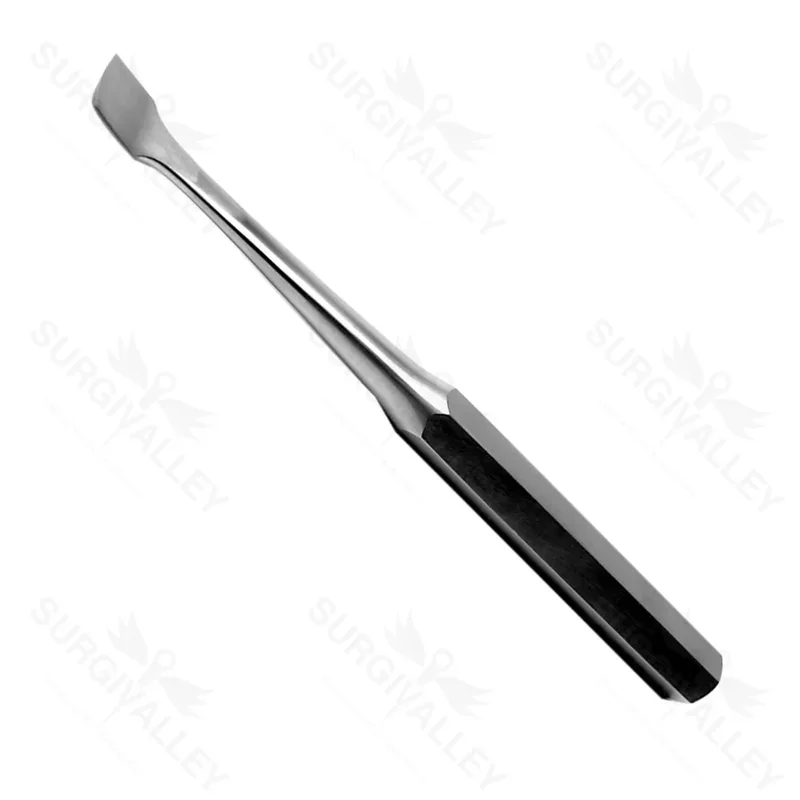
A family name is useful for starting a search, but it is not sufficient for controlling an instrument specification. The cited Sklar entries show three different Cobb configurations: reference 40-9408 is a straight 10-inch elevator with a 25 mm semi-sharp working end and phenolic handle; reference 40-9402 is a curved 9.5-inch elevator with a 1-inch sharp working end and hexagonal handle; and reference 40-6924 is identified as a Cobb spinal elevator with an 11-inch rounded 1/4-inch working end and knurled handle.
These differences affect whether two quotations describe the same item. A buyer who requests only a “Cobb elevator” may receive offers that are difficult to compare because suppliers have interpreted the family name differently. Catalogue reference control should therefore be the first checkpoint. If a reference is unavailable, describe the required configuration clearly enough for each supplier to quote against the same definition.
- Record the supplier’s exact catalogue reference.
- Treat the family name as a starting point, not a final specification.
- Separate supplier examples from Precision Kit World product facts.
Catalogue Variables to Compare Like for Like
The core Cobb elevator comparison should cover overall instrument length, working-end width or stated size, working-end edge description, straight or curved form, handle style and intended catalogue family. These fields create a common basis for reviewing offers without relying on photographs, informal names or assumptions about what a manufacturer usually supplies.
Copy dimensions exactly as presented in the applicable product record. Do not silently convert, round or reconcile values from different references. A length expressed in inches and a working-end dimension expressed in millimetres may both be appropriate when the unit is retained and the supplier confirms the quoted measurement convention. Record catalogue family designations separately when they appear.
- Overall instrument length and unit of measure
- Working-end width or stated working-end size
- Straight or curved form
- Edge description, such as rounded, semi-sharp or sharp
- Handle style and catalogue family designation
Cobb Elevator Catalogue Comparison
The cited entries demonstrate why the family name must be paired with an exact reference. A field marked “not stated” should be confirmed with the supplier rather than inferred.
| Reference | Length | Form | Working end | Handle |
|---|---|---|---|---|
| 40-9408 | 10 inches | Straight | 25 mm, semi-sharp | Phenolic |
| 40-9402 | 9.5 inches | Curved | 1 inch, sharp | Hexagonal |
| 40-6924 | 11 inches | Not stated on the cited page | 1/4 inch, rounded | Knurled |
How to Record Length, Working End, Form and Handle
A useful comparison sheet gives every quoted item a separate row and every documented variable its own field. Avoid combining several characteristics into a description such as “long curved Cobb.” Instead, record the exact overall length, working-end measurement, edge description, form and handle style. This makes omissions visible and helps procurement teams ask focused clarification questions before evaluating the quotation.
Working-end wording should be preserved rather than normalised into a broader term. The cited entries use 25 mm semi-sharp, 1-inch sharp and rounded 1/4-inch descriptions. Those phrases are not interchangeable. Straight and curved should also remain distinct fields, while handle descriptions such as phenolic, hexagonal and knurled should stay tied to the catalogue references in which they appear.
- Use one field for each measurable or descriptive variable.
- Retain the supplier’s wording for edge and handle descriptions.
- Ask for written clarification when an image and specification differ.
- Do not infer a Precision Kit World dimension from a competitor’s catalogue.
Building a Precise Cobb Elevator RFQ
A precise RFQ should give suppliers a defined response structure. Start with the requested instrument family and exact catalogue reference, if known. Then state the required overall length, working-end width or size, edge description, straight or curved form, handle style and any catalogue family designation that must be matched. If the requirement is based on an existing item, identify the reference and attach only authorised supporting documentation.
Ask suppliers to identify their own catalogue reference and list any deviation from the requested configuration. This is more useful than asking whether an item is “equivalent” without defining equivalence. Each response can then be reviewed field by field, with unresolved differences returned to the supplier before commercial comparison. Keep unsupported assumptions about material, reusability, sterilisation, certification, compatibility, availability, price or performance out of the specification.
- Buyer reference or internal item number
- Requested catalogue reference or full configuration description
- Overall length and working-end size with units
- Form, edge description and handle style
- Supplier catalogue reference and deviation statement
- Required response date, where applicable
Receiving-Inspection Checklist for Quoted Configurations
Receiving inspection should compare the delivered instrument with the approved quotation and supplier product record. Confirm that the package or accompanying documentation identifies the expected catalogue reference, then check overall form, length, working-end size, edge description and handle style against the approved fields. If the instrument is described as a Cobb spinal elevator, verify that the delivered reference carries that designation rather than assuming the family name is sufficient.
Inspection records should note discrepancies rather than resolve them informally. A different length, changed edge description, different handle style or straight instrument supplied in place of a curved one may indicate that the quotation and delivery refer to different configurations. Escalate the discrepancy through the organisation’s purchasing and quality process before acceptance, and use the same terminology as the RFQ for traceability.
- Match the delivered reference to the approved reference.
- Check length, form, working end, edge and handle.
- Record discrepancies against the quotation.
- Escalate unresolved differences before acceptance.
- Retain the inspection record with purchasing documentation.
Using Manufacturer Examples Without Assuming Universal Specifications
Manufacturer examples are valuable because they show why a Cobb elevator comparison needs detail. Sklar references 40-9408, 40-9402 and 40-6924 document distinct configurations, including differences in length, working-end description, form and handle. These examples support a procurement method: identify the variables, preserve the source wording and require the exact reference. They do not establish a universal Cobb specification or describe Precision Kit World products.
For Precision Kit World sourcing, use the Orthopedic Instruments catalogue as the broad destination and consult the individual product record for Precision Kit World-specific dimensions and configuration details. When a requested configuration is unclear, ask for confirmation rather than substituting a familiar family description. The strongest comparison is evidence-controlled and records exceptions before quotation approval.
- Use examples to demonstrate variation, not set universal specifications.
- Verify Precision Kit World details in the relevant product record.
- Require suppliers to identify exact references.
- Document exceptions before approving a quotation.
A Clearer Cobb Elevator Quotation Decision
A reliable Cobb elevator comparison moves from family name to exact catalogue reference, then checks overall length, working-end size, edge description, form, handle style and catalogue family. Recording those fields in the RFQ makes supplier responses easier to normalise and reduces the risk of comparing different configurations as though they were equivalent.
Before requesting a quotation, complete the field list and state how deviations must be reported. After delivery, compare the received instrument with the approved reference and specification. For Precision Kit World items, confirm dimensions and configuration in the applicable product record rather than transferring facts from another manufacturer.
Prepare a Cobb Elevator RFQ
Browse the Elevators catalogue, then send a quotation request with the reference, length, working-end size, form, handle and required quantity. Product-specific details remain subject to the applicable Precision Kit World record and quotation.
Frequently asked questions
What does the Cobb elevator name identify?
Cobb elevator is a family name rather than a complete product specification. The supplied Sklar examples demonstrate different straight and curved forms, lengths, working-end descriptions and handle styles within that family. Buyers should therefore request or confirm the exact catalogue reference and compare documented fields before treating quotations as equivalent.
Which dimensions should appear in a Cobb elevator RFQ?
At minimum, record overall instrument length and working-end width or stated working-end size, including the unit of measure. Add the working-end edge description, straight or curved form, handle style and catalogue family designation. The supplier should provide its exact catalogue reference and identify any deviation from the requested configuration.
How should buyers compare straight and curved Cobb elevators?
Straight and curved forms should be recorded as separate configuration fields, not treated as interchangeable descriptions. State the required form in the RFQ and check it against the supplier’s written specification and delivered instrument. A photograph may support the review, but the exact catalogue reference and written configuration should control the purchasing decision.
How can a buyer distinguish a Cobb spinal elevator from another Cobb configuration?
Ask the supplier to identify the catalogue family designation and exact reference rather than inferring the category from length or appearance. Sklar reference 40-6924 is identified as a Cobb spinal elevator and has its own documented configuration. That example shows why a spinal designation should be confirmed in the product record or quotation.
What should receiving teams check when Cobb elevators arrive?
Receiving teams should match the delivered catalogue reference to the approved quotation, then check overall length, straight or curved form, working-end size, edge description and handle style. Any difference should be recorded and escalated through the organisation’s purchasing or quality process before acceptance. Inspection terminology should match the RFQ to maintain traceability.
Related reading
- How to Prepare a Surgical Instrument RFQ That Produces an Accurate Quote
- How to Specify Surgical Instrument Dimensions, Working Ends, Handles and Configurations
- How to Compare Surgical Instrument Families Without Guesswork
Sources
Related Categories & Sourcing Hubs
Dr. William Turner
Trauma & Orthopedic Procedure Set Lead
Reviewed against DIN sterilization basket standards, itemized surgical set BOMs, and operating theatre turnaround protocols.