
 English


Plastic & Reconstructive Surgery Sets: Essential Rhinoplasty & Cosmetic Trays
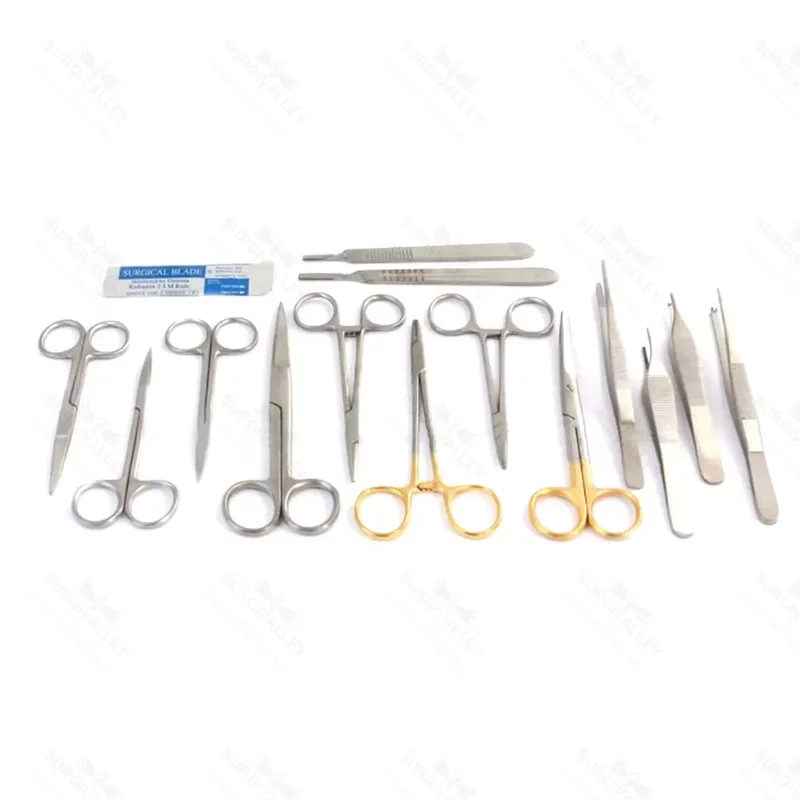
Core instrument layouts for aesthetic and reconstructive plastic surgery, from fine dissecting scissors to delicate tissue forceps.
Reviewed against DIN sterilization basket standards, itemized surgical set BOMs, and operating theatre turnaround protocols.
On this page (11)
- Plastic & Reconstructive Surgery Instrument Sets: Rhinoplasty, Blepharoplasty & Mammoplasty Tray Specs
- Executive Overview & B2B Procurement Context
- Procedural Architecture of the Recommended Sets
- Core Instrument Engineering Specifications
- Materials, Metallurgy, Surface Finish, and CSSD Compatibility
- Recommended Reconciled BOM: Open and Closed Septorhinoplasty Set
- Recommended Reconciled BOM: Abdominoplasty and Mammoplasty Set
- CSSD Sterilization Cassette and Tray Engineering
- Manufacturing, Quality Control, and Inspection Checkpoints in Sialkot
- Buyer RFQ and Sample-Approval Checklist
- Conclusion and Procurement Action
Plastic & Reconstructive Surgery Instrument Sets: Rhinoplasty, Blepharoplasty & Mammoplasty Tray Specs
Executive Overview & B2B Procurement Context
Plastic and reconstructive surgery sets must be specified as complete, reconciled procedural systems rather than as collections of individual instruments. Rhinoplasty, blepharoplasty, mammoplasty, mastopexy, abdominoplasty, facial reconstruction, and microsurgical soft-tissue procedures each require different combinations of exposure, dissection, cutting, grasping, measurement, irrigation, and closure instruments.
For hospitals, distributors, Ministry of Health tender boards, and private surgical networks, the purchasing risk is rarely limited to instrument price. The larger risks are incomplete BOMs, inconsistent patterns between production lots, poor jaw alignment, inadequate tray capacity, corrosion after CSSD processing, incorrect instrument counts, and a configuration that does not match the surgeon’s operative technique.
Precision Kit World manufactures complete surgical instrument sets, procedure trays, and CSSD sterilization cassettes in Sialkot under an ISO 13485 quality-management framework. Each quoted set can be controlled by a revision-coded BOM, instrument pattern drawings, material declarations, surface-finish requirements, inspection plans, and a final piece-count reconciliation report.
For background on complete configurations, see the surgical instrument sets and surgical sets sections. Buyers requiring private-label production, tender support, or recurring distributor supply should also review the Precision Kit World manufacturing capability and distributor program.
Why the specification matters commercially
- Clinical consistency: A surgeon should receive the same working geometry, jaw profile, handle balance, and ratchet behavior in every approved lot.
- CSSD efficiency: Hinged instruments must open correctly, delicate tips require protection, and the cassette must permit cleaning, inspection, sterilization, and drying without overloading.
- Cost control: A reconciled BOM prevents unplanned substitutions, duplicate instruments, and missing specialty tools that generate emergency purchases.
- Tender compliance: Quantities, materials, dimensions, sterilization compatibility, packaging, labeling, and quality documents should be defined before commercial comparison.
- Distributor reliability: A revision-controlled master configuration supports repeat orders across several hospitals without uncontrolled pattern drift.
Procedural Architecture of the Recommended Sets
Open and closed septorhinoplasty set
A septorhinoplasty configuration should support external or endonasal access, septal elevation, dorsal reduction, osteotomy, tip refinement, alar work, graft preparation, suction, and closure. The open approach typically requires stronger exposure and alar retraction instruments, while a closed approach places greater emphasis on narrow-profile elevators, guarded osteotomes, compact rasps, and atraumatic intranasal access.
The principal design distinction is controlled force transmission. Osteotomes must cut or separate bone without excessive lateral deflection; rasps must remove material predictably without aggressive snagging; elevators must maintain a sufficiently thin but rigid blade; and retractors must expose the field without damaging the columella, vestibular skin, or mucosa.
Abdominoplasty and mammoplasty set
Abdominoplasty and mammoplasty sets require broad exposure, controlled soft-tissue handling, long-reach dissection, efficient cutting, and reliable retraction over larger operative fields. The configuration should accommodate different breast sizes and surgical approaches, including reduction mammoplasty, augmentation revision, mastopexy, reconstruction, and abdominal contouring.
Key instruments include Tebbetts or Ferreira-style serrated breast retractors, SuperCut or tungsten-carbide scissors, TC Gorney-Freeman scissors, long dissecting forceps, Adson-Brown 7x7 micro tissue forceps, skin hooks, suction cannulae, needle holders, and deep abdominal retractors. Serrated retractors should provide secure tissue purchase without sharp, uncontrolled tooth engagement. Micro tissue forceps must be checked for symmetrical tip closure and atraumatic alignment before packing.
Blepharoplasty configuration
A blepharoplasty tray should be compact and delicate. It generally requires fine Adson or Adson-Brown forceps, small skin hooks, fine scissors, narrow retractors, delicate needle holders, small hemostats, calipers or marked rulers, and instruments suitable for controlled dissection around thin eyelid tissues.
For eyelid surgery, excessive surface roughness, offset tips, high spring force, or oversized jaws can increase tissue trauma. The quotation should therefore define tip width, serration pattern, jaw closure, handle finish, and whether the instrument is intended for skin, orbicularis, septum, or fine suture handling.
Core Instrument Engineering Specifications
Aufricht retractor
The Aufricht retractor is commonly specified for external rhinoplasty exposure. The purchaser should identify blade width, blade length, working-angle geometry, handle orientation, and whether the blade is blunt, fenestrated, or perforated. The blade must resist permanent set during normal manual retraction. A practical engineering control is to verify the working blade against the approved drawing and to apply a controlled deflection test using a fixture rather than relying only on visual inspection.
Unless a surgeon-approved drawing states otherwise, the blade should have smoothly radiused edges, no burrs, and no sharp transition where the blade joins the shaft. The handle should provide a secure grip while remaining compatible with the selected sterilization cassette.
Cottle and Cinelli guarded osteotomes
Cottle and Cinelli osteotomes should be specified by nominal cutting width, shaft length, guard position, bevel orientation, and handle type. Guarded patterns are particularly important where the surgeon requires controlled osteotomy depth and protection of adjacent tissue.
Recommended procurement controls include a dimensional tolerance of ±0.10 mm for cutting width on standard osteotomes and ±0.05 mm for mating guard-to-shaft location where the guard is a functional feature. Cutting edges should be free of roll-over, chips, deep grinding marks, and asymmetrical bevels. Edge geometry should be validated against an approved master sample rather than described only as “sharp.”
Fomon tungsten-carbide dorsal rasps
Fomon-pattern dorsal rasps should be quoted by overall length, working length, rasp profile, tooth direction, tooth density, and whether the working surface is tungsten-carbide brazed, mechanically fixed, or manufactured from a monolithic material. The purchaser should specify whether the rasp is intended for dorsal bone reduction, lateral wall refinement, or finishing work.
For brazed carbide rasps, the manufacturing inspection should include 100% visual examination of the joint, assessment for voids or exposed braze, and a torque or pull verification on a defined sample plan. Carbide inserts should not have loose segments, lifted corners, sharp perimeter projections, or contamination that could detach during use or cleaning.
Joseph periosteal elevators
Joseph elevators are typically required in narrow and broad blade profiles. The critical variables are blade thickness, blade width, distal radius, shaft stiffness, handle balance, and surface finish. A nominal blade-thickness tolerance of ±0.05 mm is appropriate for delicate patterns when confirmed by the approved drawing; broader general dimensions may be controlled to ±0.10 mm.
Blade edges should be smooth and atraumatic unless the customer specifically requests a cutting or scraping edge. The instrument must not exhibit visible twist, permanent bend, or blade-to-handle misalignment after controlled manual loading.
Converse alar hooks
Converse alar hooks require careful control of hook radius, point geometry, shank length, and handle orientation. Hook points should be consistently formed and polished, with no uncontrolled burrs or sharp projections beyond the approved pattern. Because the hook engages delicate alar tissue, the buyer should state whether a blunt, semi-sharp, single-prong, or double-prong configuration is required.
Tebbetts and Ferreira serrated breast retractors
Breast retractors should be specified by blade width, blade length, tooth count, tooth height, tooth pitch, rake angle, and handle configuration. Serrations must be uniform and securely formed. A practical production tolerance is ±0.10 mm for tooth pitch and ±0.05 mm for tooth height on fine retractors, subject to surgeon approval and the controlled drawing.
Large retractors should be checked for blade flatness, edge radius, handle rigidity, and permanent deformation after a controlled load test. Retractor edges should be rounded or finished according to the approved tissue-contact specification.
SuperCut and tungsten-carbide Gorney-Freeman scissors
Scissors should be identified by overall length, blade length, curved or straight profile, tip pattern, serrated or non-serrated blade, ring size, lock-screw type, and insert material. “SuperCut” should be treated as a functional configuration requiring a sharp cutting edge on one blade and an appropriate opposing edge or serration pattern, not merely as a product name.
TC scissors require secure carbide inserts, uniform insert seating, correct blade crossing, and consistent cutting from the proximal blade through the distal tip. The acceptance test should use the specified test medium, such as the customer-approved synthetic sheet or suture size, over a defined number of cuts. Cutting performance must be recorded against the approved sample, because a generic paper test does not represent every surgical application.
Adson-Brown 7x7 micro tissue forceps
The 7x7 designation should be confirmed as seven teeth on each opposing jaw, unless the customer’s clinical convention defines the pattern differently. The quotation should state jaw width, jaw length, tooth pitch, tip thickness, overall length, and whether the forceps are straight, angled, or bayonet-shaped.
Inspection should include tooth-to-tooth alignment under magnification, full jaw closure without daylight at the working tips, absence of tooth rollover, and a controlled spring-return check. Tip edges must be polished without rounding the functional teeth or creating a sharp external burr.
Materials, Metallurgy, Surface Finish, and CSSD Compatibility
Instrument steels
Reusable surgical instruments are commonly manufactured from corrosion-resistant martensitic stainless steels selected for hardness, edge retention, toughness, and resistance to repeated cleaning and sterilization. ASTM F899 is a useful reference for stainless steel categories used in surgical instruments, while ISO 7153-1 provides a material-selection reference for surgical instruments. The exact grade should be declared on the technical file or material certificate rather than inferred from appearance.
Typical material options include martensitic stainless steel for scissors, osteotomes, rasps, and cutting instruments; austenitic stainless steel for selected retractors and non-cutting components; and tungsten-carbide inserts for scissors or rasp working surfaces. The final grade, heat-treatment condition, and hardness range should be fixed in the purchase specification.
Recommended material and hardness controls
| Component | Preferred material family | Typical engineering control | Verification method | Procurement note |
|---|---|---|---|---|
| Cutting scissors | Martensitic stainless steel with optional tungsten-carbide inserts | Hardness commonly controlled in an agreed range such as 48–56 HRC for the steel body; final value depends on grade and heat treatment | Rockwell C testing under ASTM E18 methodology or equivalent validated method | State blade profile, edge type, insert configuration, and cutting test medium |
| Osteotomes | Hardened martensitic stainless steel | Cutting width tolerance typically ±0.10 mm; bevel symmetry and edge condition controlled by drawing | Calibrated optical measurement, profile comparison, and visual inspection at magnification | Specify guarded or unguarded pattern and bevel orientation |
| Dorsal rasps | Stainless steel body with tungsten-carbide working surface where requested | Tooth profile and working length controlled to approved master; no loose carbide or exposed braze voids | 10x visual inspection, dimensional check, and defined joint-strength sampling | State carbide attachment method and replacement or repair policy |
| Retractors | Corrosion-resistant stainless steel, commonly austenitic or martensitic according to rigidity requirement | Blade width and tooth pitch typically ±0.10 mm; controlled deflection and no permanent set after agreed load | Calibrated gauges, fixture-based load test, and flatness inspection | Define blade radius, teeth, fenestration, and handle style |
| Micro forceps | Fine-grain stainless steel selected for spring behavior and tip stability | Tip alignment typically checked to approximately 0.05 mm or the approved visual master, with no daylight at closure | Optical comparator or microscope, feeler gauge where applicable, and functional closure test | Confirm 7x7 teeth, jaw width, length, and atraumatic finish |
| Periosteal elevators | Hardened or semi-hardened stainless steel according to blade flexibility requirement | Blade thickness commonly controlled to ±0.05 mm for fine patterns and ±0.10 mm for general patterns | Micrometer measurement, profile gauge, and controlled deflection inspection | State blunt, sharp, single-ended, double-ended, and blade orientation |
| Tray and cassette | Stainless steel tray with silicone, PEEK, or equivalent medical-grade supports where required | Dimensional fit controlled to the sterilizer and instrument layout; support clearance prevents tip contact | Full-set fit check, lid closure, latch-cycle test, and sterilization-load review | Specify cassette footprint, stacking limits, perforation, mat, and labeling |
Hardness, toughness, and heat treatment
Hardness must not be selected in isolation. Excessive hardness can reduce toughness and increase edge chipping, while insufficient hardness can cause rapid edge deformation, jaw wear, or loss of spring behavior. Heat-treatment records should identify furnace cycle, lot traceability, quench or cooling method where applicable, tempering cycle, and hardness results.
For products using martensitic stainless steel, the buyer should request a material certificate or material declaration identifying the grade and applicable standard. For tungsten-carbide components, the supplier should identify carbide grade or equivalent performance designation, insert retention method, and inspection criteria.
Surface finish and corrosion resistance
Surface finish should be specified functionally. A satin finish may reduce glare in the operating field, while a high-polish finish can facilitate visual inspection and cleaning. Working surfaces, box locks, serrations, and ratchets must not contain polishing compound, embedded abrasive, burrs, deep directional scratches, or smeared edges.
Where a corrosion-resistance test is required, the purchase specification should state the method, exposure condition, sample size, and acceptance criteria. ASTM F1089 may be referenced for corrosion testing of surgical instruments, while ISO 13402 is relevant to resistance against autoclaving, corrosion, and thermal exposure for hand-held surgical instruments. These tests should be treated as verification requirements and not as a substitute for validated cleaning and sterilization instructions.
A practical validation plan may include repeated exposure to saturated-steam cycles at the hospital’s approved cycle parameters, followed by visual examination for red rust, pitting, staining, loss of passivation, joint seizure, and degradation of non-metallic components. The number of cycles, temperature, holding time, drying phase, detergent chemistry, and water quality must be agreed before testing.
Passivation and cleaning residues
Stainless-steel instruments should undergo a controlled cleaning and passivation process appropriate to the selected alloy and finish. The process should prevent iron contamination, acid residue, abrasive residue, and chloride exposure. Final rinse-water quality should be defined by the manufacturing quality plan; low-chloride or deionized water is commonly preferred for final rinsing where the customer’s validated process supports it.
Instruments with box locks, ratchets, tungsten-carbide inserts, or fine teeth require particular attention to cleaning accessibility. Lubricants, if used, must be compatible with steam sterilization and must not obstruct joint movement or leave an unacceptable residue.
Recommended Reconciled BOM: Open and Closed Septorhinoplasty Set
The following is an engineering example for RFQ development. It is not a universal clinical protocol. The final BOM should be approved by the surgeon, CSSD manager, and procurement authority before production. Quantities, lengths, and patterns should be revision-controlled.
| Line | Instrument | Nominal specification | Quantity | Inspection and packing control |
|---|---|---|---|---|
| 1 | Aufricht nasal retractor | Blunt blade, approximately 22–30 mm working width, stainless steel | 1 | Blade symmetry, edge radius, shaft alignment, no permanent set |
| 2 | Cottle guarded osteotome | Approximately 4 mm cutting width, guarded, straight pattern | 1 | Width, bevel symmetry, guard location, edge integrity |
| 3 | Cottle guarded osteotome | Approximately 6 mm cutting width, guarded, straight pattern | 1 | Width, bevel symmetry, guard location, edge integrity |
| 4 | Cinelli guarded osteotome | Approximately 3 mm cutting width, guarded, narrow profile | 1 | Profile, guard security, cutting-edge condition |
| 5 | Cinelli guarded osteotome | Approximately 4 mm cutting width, guarded, narrow profile | 1 | Profile, guard security, cutting-edge condition |
| 6 | Fomon dorsal rasp | Fine tungsten-carbide or approved equivalent working surface | 1 | Tooth uniformity, carbide retention, braze or joint inspection |
| 7 | Fomon dorsal rasp | Coarse tungsten-carbide or approved equivalent working surface | 1 | Tooth direction, working length, carbide retention |
| 8 | Joseph periosteal elevator | Fine narrow blunt blade, approximately 3–5 mm | 1 | Blade thickness, distal radius, straightness, surface finish |
| 9 | Joseph periosteal elevator | Broad blunt blade, approximately 6–8 mm | 1 | Blade width, edge radius, shaft rigidity |
| 10 | Converse alar hook | Single or double prong as approved; atraumatic handle | 2 | Prong symmetry, hook radius, point finish, handle alignment |
| 11 | Fine Adson forceps | 1x2 or plain, approximately 12–15 cm | 2 | Tip alignment, spring action, serration or tooth integrity |
| 12 | Adson-Brown tissue forceps | 7x7 teeth, approximately 12–15 cm | 2 | 7x7 count, jaw closure, tooth alignment under magnification |
| 13 | Fine nasal scissors | Straight or curved, blunt or sharp as approved | 1 | Blade crossing, tip closure, cutting test, joint movement |
| 14 | TC needle holder | Fine jaw, approximately 15–18 cm | 1 | Insert security, ratchet engagement, jaw alignment |
| 15 | Small skin hooks | Single or double prong, fine pattern | 2 | Prong geometry, handle security, point finish |
| 16 | Measuring ruler or nasal caliper | Graduated stainless steel, surgeon-approved scale | 1 | Graduation legibility, dimensional accuracy, corrosion resistance |
| 17 | Fine suction cannula | Length and tip profile selected by surgeon | 1 | Patency, atraumatic tip, connector compatibility |
| 18 | CSSD sterilization cassette | Perforated stainless-steel cassette with silicone supports | 1 | Complete fit, lid closure, latch operation, instrument-tip protection |
Example set count: 24 individual instruments and accessories when quantities are calculated by line item and including the cassette as one tray component. The commercial BOM must state whether the cassette, silicone mat, lid, indicator card holder, and identification plate are included in the quoted count.
Recommended Reconciled BOM: Abdominoplasty and Mammoplasty Set
| Line | Instrument | Nominal specification | Quantity | Inspection and packing control |
|---|---|---|---|---|
| 1 | Tebbetts serrated breast retractor | Broad blade, serrated tissue-contact surface, surgeon-approved length | 2 | Tooth pitch, blade flatness, handle rigidity, edge radius |
| 2 | Ferreira serrated breast retractor | Deep or long-reach pattern, serrated blade | 2 | Tooth uniformity, shaft alignment, deflection, permanent-set check |
| 3 | Gorney-Freeman TC scissors | Curved, approximately 18–23 cm, tungsten-carbide insert | 1 | Insert seating, blade crossing, ratchet or screw security, cutting test |
| 4 | SuperCut scissors | Curved or straight, approximately 18–23 cm, approved edge configuration | 2 | Blade profile, distal-tip cutting, smooth joint movement |
| 5 | Adson-Brown micro tissue forceps | 7x7 teeth, approximately 15–18 cm | 2 | Tooth count, tip alignment, closure, spring return |
| 6 | Long dissecting forceps | Plain or serrated, approximately 20–25 cm | 2 | Jaw alignment, handle stiffness, atraumatic finish |
| 7 | Allis tissue forceps | Multiple-tooth atraumatic or standard pattern as approved | 4 | Tooth formation, box-lock movement, ratchet engagement |
| 8 | Kocher forceps | Toothed, approximately 16–20 cm | 2 | Tooth alignment, ratchet function, joint smoothness |
| 9 | TC needle holder | Approximately 18–20 cm, fine-to-medium jaw | 2 | Insert security, jaw closure, ratchet positions |
| 10 | Long abdominal retractor | Deep blade, blunt or fenestrated, surgeon-approved profile | 2 | Blade angle, rigidity, surface finish, no permanent set |
| 11 | Skin hooks | Single and double prong, fine pattern | 4 | Prong symmetry, atraumatic finish, handle attachment |
| 12 | Suction cannulae | Short and long patterns with compatible connector | 2 | Patency, lumen finish, tip geometry, connector fit |
| 13 | Scalpel handles | Standard handle sizes selected for blade compatibility | 2 | Blade-seat geometry, corrosion resistance, surface finish |
| 14 | Hemostatic forceps | Mix of curved and straight, medium length | 8 | Jaw serration, box-lock alignment, ratchet engagement |
| 15 | Measuring ruler | Graduated stainless steel, surgeon-approved scale | 1 | Graduation accuracy and legibility |
| 16 | CSSD sterilization cassette | Deep perforated cassette with protective silicone supports | 1 | Full-set fit, lid clearance, latch operation, load identification |
Example set count: 37 individual instruments and accessories when each quantity is reconciled by line item and the cassette is separately identified as a tray component. The final commercial count must distinguish instruments from tray hardware and consumable sterilization indicators.
CSSD Sterilization Cassette and Tray Engineering
A CSSD cassette is part of the procedural system, not merely a storage box. The design must support pre-cleaning, inspection, lubrication where applicable, arrangement for sterilization, safe transport, and controlled presentation in the operating room.
Tray construction requirements
- Material: Use a corrosion-resistant stainless steel grade appropriate for repeated steam exposure, with smooth internal surfaces and no inaccessible dirt traps.
- Perforation: Provide sufficient perforated area for steam contact and condensate drainage while preserving rigidity and protecting small components.
- Instrument supports: Use medical-grade silicone, PEEK, or another validated support material that remains stable under the specified cleaning and sterilization process.
- Tip protection: Prevent osteotome edges, rasp surfaces, scissors tips, forceps teeth, and hook points from contacting the tray or one another.
- Hinged instruments: Pack scissors, clamps, and needle holders in an open or service position as required by the validated CSSD procedure.
- Identification: Include a permanently marked or laser-etched tray identifier, BOM revision, set name, and serial or lot traceability where required.
- Load control: Confirm total loaded weight, sterilizer shelf dimensions, stacking limits, lid clearance, and compatibility with the hospital’s validated cycle.
The customer should provide the sterilizer model, chamber dimensions, cycle type, temperature, exposure time, drying time, wrapping or container system, and maximum permitted load. A tray designed without these parameters may fit physically but fail operationally through poor drying, excessive weight, or inadequate steam penetration.
Manufacturing, Quality Control, and Inspection Checkpoints in Sialkot
1. Contract and design review
Before production, Precision Kit World should establish a controlled technical package containing the approved BOM, instrument drawings, quantity matrix, material requirements, surface finish, packaging arrangement, marking, inspection level, and acceptance criteria. Ambiguous terms such as “standard,” “fine,” “heavy,” “sharp,” or “large” should be converted into dimensions, profiles, reference samples, or functional tests.
2. Incoming material inspection
- Verify material certificates, heat numbers, grade, dimensions, and supplier traceability.
- Check bar, sheet, tube, and wire stock for surface defects, lamination, dents, and dimensional variation.
- Verify tungsten-carbide inserts for dimensions, chipping, contamination, and correct lot identification.
- Segregate nonconforming material before machining, forging, forming, or grinding.
3. Forming, machining, and grinding controls
Forged and machined parts should be checked for cracks, laps, incomplete forming, excessive tool marks, and dimensional drift. Cutting edges, rasp teeth, serrations, box locks, ratchets, and tissue-contact tips require dedicated inspection criteria because general cosmetic inspection is insufficient.
Critical dimensions should be measured using calibrated micrometers, vernier calipers, pin gauges, optical comparators, profile projectors, or coordinate measurement equipment as appropriate. Typical controls include ±0.05 mm for fine tip features, ±0.10 mm for general working dimensions, and drawing-specific limits for mating features. The tolerance must be selected according to clinical function and manufacturing capability rather than applied uniformly to every feature.
4. Heat treatment and hardness verification
Each heat-treatment lot should remain traceable to the material batch and process record. Hardness should be tested on representative samples or on each component category according to the control plan. Results outside the agreed range require segregation and technical review before finishing.
5. Passivation, polishing, and cleaning
After polishing and passivation, instruments should be free of abrasive residue, oils, metal dust, acid residue, and embedded foreign material. Box locks and serrations must be cleaned without removing the geometry needed for secure function. Fine forceps and hook points should receive magnified inspection because over-polishing can reduce functional tooth or point geometry.
6. Functional inspection
- Scissors: smooth opening and closing, correct blade crossing, no tip gap when closed, and defined cutting performance.
- Forceps: aligned tips, controlled spring action, secure grip, and no unintended tooth interference.
- Needle holders: correct jaw closure, insert retention, ratchet engagement, and no lateral play beyond the approved limit.
- Retractors: correct blade geometry, rigidity, tooth uniformity, and no permanent deformation after the agreed load test.
- Osteotomes: correct width, bevel, guard location, edge integrity, and shaft straightness.
- Rasps: uniform tooth profile, secure carbide attachment, no loose particles, and correct working direction.
- Elevators and hooks: blade or hook alignment, smooth tissue-contact surfaces, and correct handle attachment.
7. Durability verification
Durability should be verified using a documented sample plan. Possible tests include repeated ratchet cycles, repeated scissors opening and closing, controlled deflection of retractors, joint-play measurement, carbide-insert retention testing, and repeated exposure to the customer’s validated cleaning and steam-sterilization cycle.
Testing must record the initial condition, test equipment, applied load or number of cycles, sterilization parameters, post-test inspection, and acceptance decision. A statement such as “tested for durability” is not sufficient for a tender-quality technical file.
8. Final BOM and set reconciliation
At final inspection, the production order should be reconciled against the approved BOM by item number, description, quantity, pattern, length, material, and revision. The packing operator and independent checker should verify the set separately. Missing, extra, substituted, or visually similar instruments must be recorded as nonconformities rather than corrected informally.
The final release package may include the approved BOM, inspection report, material declaration, certificate of conformity, sterilization cassette specification, care and handling instructions, and lot or serial traceability documents according to the customer’s regulatory and tender requirements.
Buyer RFQ and Sample-Approval Checklist
To obtain a technically comparable quotation, the buyer should provide the following parameters:
Clinical and configuration requirements
- Procedure name and approach: open septorhinoplasty, closed septorhinoplasty, blepharoplasty, mammoplasty, mastopexy, abdominoplasty, or combined configuration.
- Surgeon-approved reference set, catalog images, drawings, or physical master samples.
- Complete instrument list with line number, quantity, pattern, length, working width, tip style, and side or orientation where applicable.
- Required brands or named patterns, such as Aufricht, Cottle, Cinelli, Fomon, Joseph, Converse, Tebbetts, Ferreira, Gorney-Freeman, Adson-Brown, or equivalent approved pattern.
- Whether substitutions are permitted and the formal approval process for any substitution.
- Whether a separate left and right instrument is required.
Material and finish requirements
- Stainless-steel grade or permitted material family, with material certificate requirements.
- Hardness range for cutting, grasping, and structural components.
- Tungsten-carbide insert requirements, attachment method, and retention test.
- Polished, satin, matte, or glare-reducing finish.
- Passivation, corrosion-resistance testing, and allowable post-sterilization appearance.
- Laser marking, electrochemical marking, identification code, lot code, and brand requirements.
Dimensional and functional requirements
- Overall length and working length, normally stated in millimetres.
- Blade width, thickness, tooth count, tooth pitch, hook radius, jaw width, and rasp profile.
- Dimensional tolerances for every critical feature, such as ±0.05 mm or ±0.10 mm where technically justified.
- Scissor cutting medium, number of cuts, blade overlap, and acceptable tip performance.
- Forceps closure, jaw alignment, tooth engagement, spring force, and allowable lateral play.
- Retractor load or deflection test and acceptable permanent deformation.
- Osteotome edge geometry, guard position, bevel orientation, and edge inspection method.
Tray and CSSD requirements
- Cassette external dimensions, sterilizer compatibility, lid type, latch type, and maximum loaded weight.
- Instrument layout drawing showing every location and orientation.
- Silicone mat, tip protector, separator, and support-material requirements.
- Cleaning chemistry, water quality, ultrasonic cleaning restrictions, lubrication requirements, and steam-cycle parameters.
- Validated cycle temperature, exposure time, drying time, and maximum stacking configuration.
- Tray marking, barcode or QR identification, BOM revision, and set-level traceability.
Commercial and quality-document requirements
- Required prototype quantity and sample-approval stages.
- Annual demand, minimum order quantity, forecast, delivery schedule, and packaging configuration.
- Private-label, distributor, or tender documentation requirements.
- Inspection level, sampling plan, certificate of conformity, material declaration, and nonconformance process.
- Replacement policy for missing instruments, damaged tips, corrosion, or pattern deviation.
- Requirement for pre-shipment photographs, packing-list reconciliation, and signed final inspection report.
Conclusion and Procurement Action
A high-performing plastic and reconstructive surgery set is defined by clinical architecture, controlled metallurgy, repeatable working geometry, validated CSSD compatibility, and accurate piece-count reconciliation. The rhinoplasty configuration should protect precision osteotomy and delicate intranasal handling, while the mammoplasty and abdominoplasty configuration should provide stable broad exposure, reliable tissue handling, and durable cutting performance. Blepharoplasty components require an additional level of tip alignment and atraumatic finishing.
Precision Kit World can convert a surgeon’s reference list, hospital tender schedule, or distributor catalog into a controlled BOM, technical drawing package, sample set, and sterilization cassette layout. Submit the required procedures, quantities, dimensions, reference patterns, and CSSD parameters through the Precision Kit World contact page for quotation and engineering review.
Related Categories & Sourcing Hubs
Dr. Hira Khalid
Ophthalmic & Reconstructive Procedure Set Specialist
Reviewed against DIN sterilization basket standards, itemized surgical set BOMs, and operating theatre turnaround protocols.